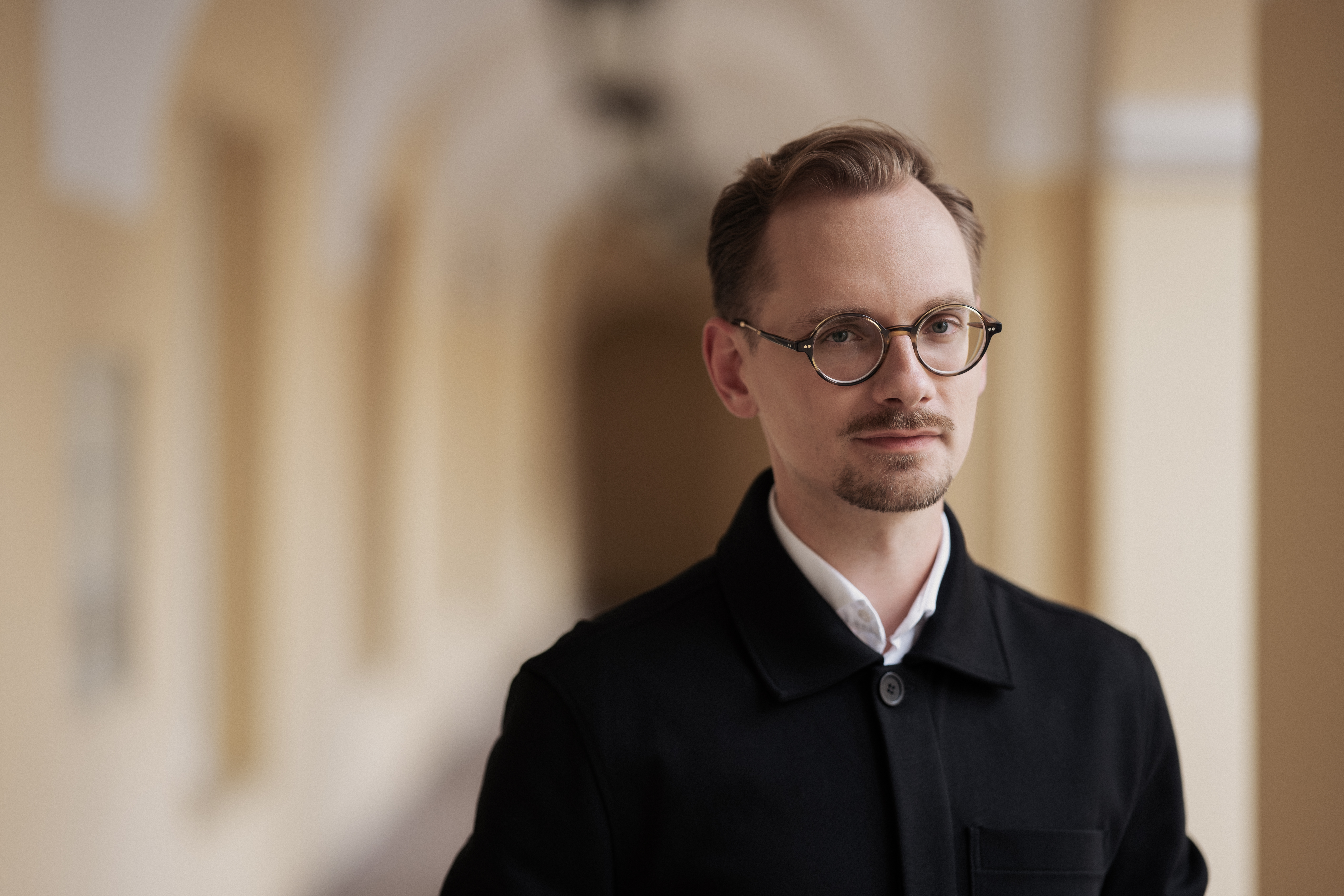
Vilius Bartninkas
Vilnius University
Short bio:
Vilius Bartninkas is an Associate Professor of Ancient Greek Philosophy at Vilnius University and the Head of the Department of Classical Philology. He has published an award-winning monograph Traditional and Cosmic Gods in Later Plato and the Early Academy (CUP, 2023; The Manfred Lautenschlaeger Award for Theological Promise 2025) as well as many articles and book chapters on ancient cosmology, politics and theology in Mnemosyne, Polis and elsewhere.
Abstract:
The Nocturnal Council as a Group Mind in Plato’s Laws
Plato’s Laws proposes establishing an enigmatic institution called the Nocturnal Council and assigns it an even more enigmatic role: safeguarding laws in the souls of Magnesian citizens. To explain how this form of psychic protection is supposed to work, the dialogue develops two comparisons between the Nocturnal Council and mind (νοῦς). The first passage (12.962b–c) emphasises that the Nocturnal Council is a knower of political purpose, without which the city would be mindless and senseless. The second passage (12.964e–965a) continues with this cognitive image but introduces an internal division among the Nocturnal Council’s members: some are like mind, while others are like senses. I label these group mind comparisons as GMC1 and GMC2. In this paper, I argue that GMC1 and GMC2 provides evidence for a theory of distributed cognition. Specifically, GMC1 treats the Nocturnal Council as an entity of collective intelligence for its capacity to ensure epistemic unity within the city by recognising the city’s proper goal and means to it. GMC2 explores further how the unity of the knowing agent itself is achieved by aligning its diverse members and distributing cognitive labour. This interpretation not only situates Plato within contemporary discussions on group agency but also clarifies the role of psychic protection in the legal context of the Laws.